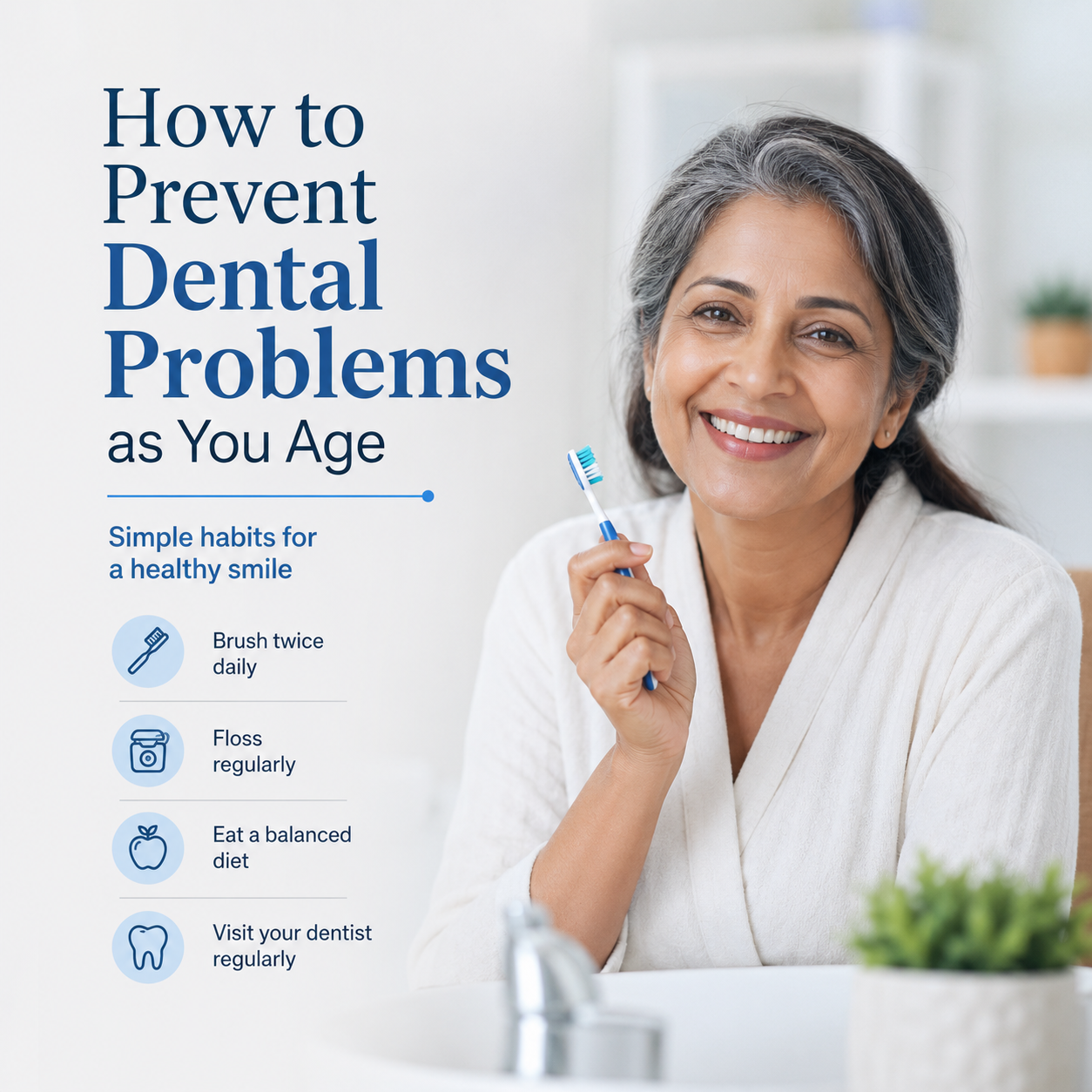
How to Prevent Dental Problems as You Age | Oral Health Tips
Maintaining good oral health becomes increasingly important as we grow older. Ageing does not automatically mean losing your teeth, but changes in oral health, medications, diet, and daily habits can increase the risk of tooth decay, gum disease, dry mouth, sensitivity, and tooth loss. With proper dental care and regular check-ups, many of these problems can be prevented.
Here are some simple and effective ways to protect your teeth and gums as you age.
1. Brush Twice a Day
Brush your teeth twice daily for approximately two minutes using a soft-bristled toothbrush and fluoride toothpaste. Brush gently along the gumline and all tooth surfaces to remove plaque without irritating your gums.If limited hand movement makes brushing difficult, ask your dentist about an electric toothbrush or other suitable oral hygiene aids.
2. Keep Your Gums Healthy
Gum disease is a common oral health concern and can become particularly important as you get older. Swollen, tender, bleeding, or receding gums should not be ignored.daily brushing, cleaning between your teeth, and professional dental examinations can help maintain healthy gums and identify potential problems early.
3. Clean Between Your Teeth
A toothbrush cannot effectively clean every space between your teeth. Floss, interdental brushes, or other dentist-recommended cleaning aids can help remove plaque and trapped food. If traditional flossing is difficult, ask your dentist which alternative would work best for you.
4. Manage Dry Mouth
Dry mouth can occur due to ageing-related changes, certain medications, or other factors. Reduced saliva can increase the risk of cavities and oral discomfort.Drink water regularly and discuss persistent dry mouth with your dentist. They can recommend appropriate strategies based on the underlying cause.
5. Maintain a Healthy Diet
Your diet plays an important role in oral health. Limit frequent sugary snacks, sweets, and sugary drinks, which can increase the risk of tooth decay.choose a balanced diet and drink plenty of water. If chewing has become difficult, speak with your dentist about ways to maintain nutrition while protecting your oral health.
6. Schedule Regular Dental Check-Ups
Regular dental check-ups allow your dentist to identify cavities, gum disease, worn teeth, infections, and other oral health concerns at an early stage.your dentist can also recommend a personalized check-up schedule depending on your dental history and individual risk factors.
7. Care for Dentures and Dental Implants
If you wear dentures, clean them properly and have them checked if they become loose or uncomfortable. Patients with dental implants should continue regular brushing and interdental cleaning and attend recommended follow-up appointments.
Frequently Asked Questions
1. Is tooth loss a normal part of ageing?
No. Tooth loss is not an unavoidable part of ageing. Good oral hygiene, healthy habits, regular dental visits, and timely treatment can help you maintain your natural teeth.
2. How often should older adults visit the dentist?
The ideal frequency varies according to individual oral health and risk factors. Your dentist can recommend an appropriate check-up schedule.
3. Why do my teeth become more sensitive as I age?
Sensitivity can be associated with gum recession, enamel wear, cavities, cracked teeth, or other dental conditions. Persistent sensitivity should be evaluated by a dentist.
4. How can I prevent gum disease as I get older?
Brush twice daily, clean between your teeth, avoid tobacco, maintain a balanced diet, and attend regular professional dental examinations.
5. What should I do if I have a dry mouth?
Drink water regularly and speak with your dentist if dry mouth is persistent. Your dentist can help identify possible causes and recommend suitable solutions.
6. Can older adults still get dental implants?
Many older adults can be candidates for dental implants, but suitability depends on individual oral and general health, bone condition, and other factors. A dental evaluation is necessary before treatment.
Protect Your Smile at Every Age
Healthy teeth and gums can contribute to better comfort, nutrition, communication, and quality of life. By maintaining daily oral hygiene, eating a balanced diet, managing dry mouth, and visiting your dentist regularly, you can reduce your risk of common dental problems as you age.
If you experience tooth pain, bleeding gums, loose teeth, persistent sensitivity, swelling, or other changes in your mouth, seek professional dental advice rather than waiting for the problem to worsen.